Showing posts with label radishes. Show all posts

September 28, 2017

Seeding a Fall Vegetable Garden

Self-sown beans
In the United States most of us are well into fall/autumn and I wanted to do a big fall garden this year which means lots of direct seeding. It's been in the 90's (32 degrees Celsius) for most of September. But cooler weather is predicted for this weekend, so I've been running around like a crazy person this week preparing the rest of the garden beds.

A few things did get started in containers, but they were visited by one disaster after another. If it wasn't squirrels digging and mangling seedlings, than it was birds pecking off every single spinach seedling in 3 containers. Then there was the torrential rain.

For the month of September I have been direct seeding in the garden:
  • peas
  • radish
  • turnip
  • carrot
  • beet
  • sprouting broccoli
  • sprouting turnip
  • spinach
  • lettuce
  • chicory
  • endive
  • mizuna
  • tatsoi
  • mibuna
  • choy sum
  • pak choy
  • gailan
  • komatsuna
  • corn salad
  • mustard
Direct seeding is definitely where it's at. Sprinkle a few seeds on the ground and water everyday till they germinate, then watch them grow. I just love watching plants go through their whole lifecycle. So fun.

When the seedlings are little and just starting to germinate, I water by hand everyday with a watering can that has a fine stream. Once the plants get a bit bigger, I'll start thinning/harvesting.

With it being so hot most everything is germinating in 3-4 days. Although, I had to replant one of the pea beds a couple times, either due to old seed or planting them too early in the day and they ended up cooking in the ground.

Plans for October:
  • Dig and plant the bed for fava beans or broad beans.
  • Dig and plant the greenhouse with spinach, lettuce, and peas.
  • Direct seed even more turnips and radishes
I hand dug the beds, broke up the top crust with a rake, broadcast sowed the tiny seeds, and then tamped down the soil with the top of a rake. For beets, carrots, turnips, and radishes I pulled back the soil, broadcast the seeds, and then covered with soil.

It's definitely a little late for planting carrots and beets but we should have two more months of frost free weather, and there's always a chance for a mild winter.
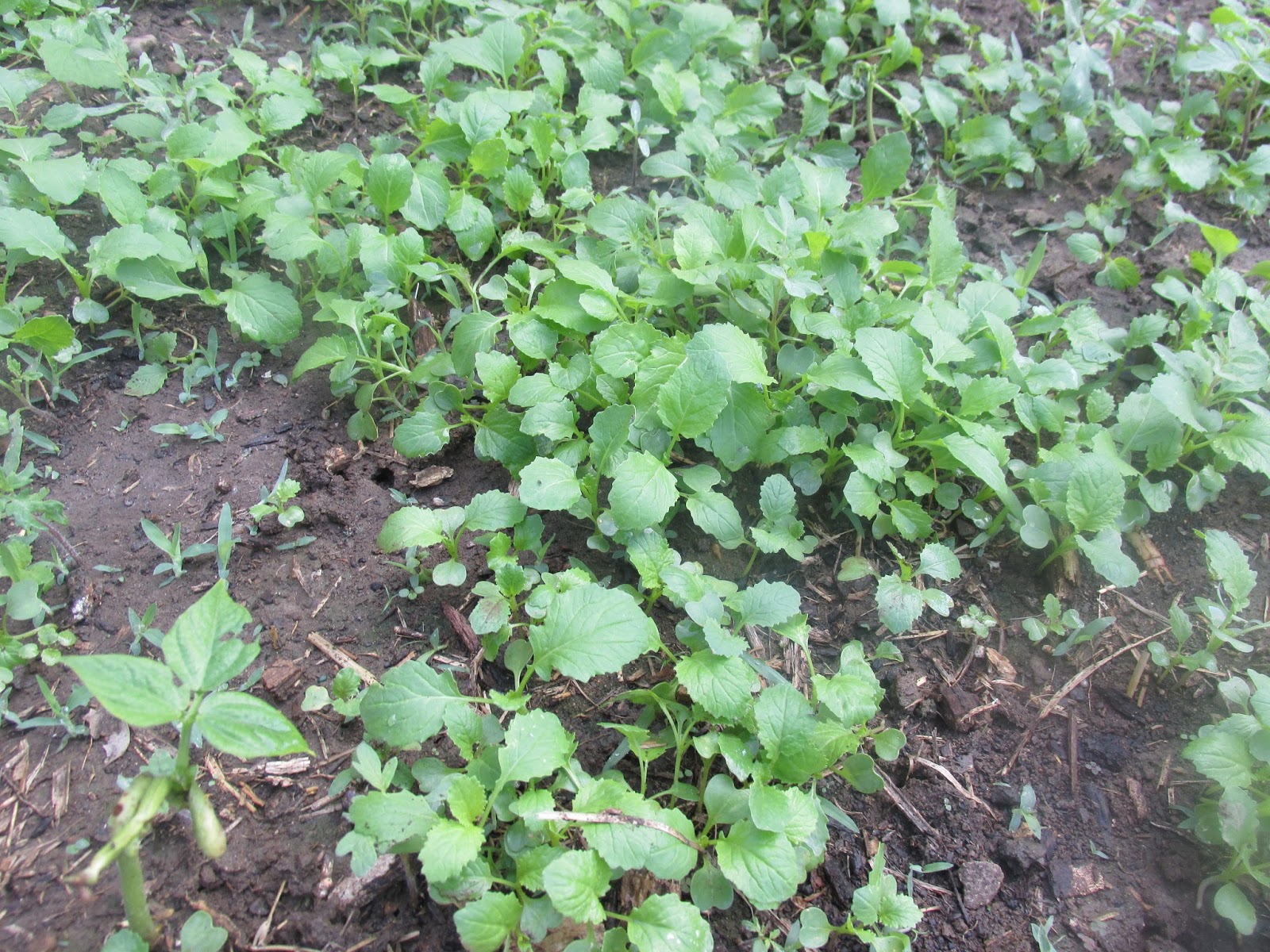
Mingling with self-sown bush beans are rapini/sprouting broccoli, sprouting turnips, and kohlrabi.
Sprouting broccoli or broccoli raab.
Choy sum is a green that is usually allowed to bolt, the flowering stems are supposed to be deliciously sweet and crunchy. I've had them prepared by quick parboiling and then quickly stir-fried with garlic and salt in a very hot pan. So good.
The pea beds are interplanted with turnips and Giant Luo Buo radishes.
Little snap pea seedlings. This bed came up fine, but the peas in the other bed had to be replanted 3 times.
Sprouting turnips or Sessantina cima di rapa
 The pretty serrated leaves of Early mizuna.
Mibuna is such a stately leafy green.
The every pleasant tatsoi.
Tomato cages are being used as supports for the peas, and then turnips and radishes are planted in-between. You can also see the self-sown squash and okra in these beds.
Radishes and turnips taste better when grown in cooler weather, so I try to do a second planting of them in October. Just in case the September planting sees some hot weather, which can make the turnips and radishes a bit too spicy.

September 20, 2015

An Early Fall Vegetable Garden in September

The bed on the left has carrots, radishes, and newly sprouted spinach. On the right is the kohlrabi, turnip and daikon radish bed.
Carrots and radishes intermingling, these were seeded on August 27th.
Where the carrots didn't come up, spinach was seeded amongst the already growing radishes on September 14th.
Kohlrabi planted September 5th are forming their first true leaves.
Shogoin turnips are leafing up well, planted August 27th.
 Ta Mei Hwa daikon radishes growing quickly, seeded September 5th.
This bed was newly seeded September 14th with spinach, chicory, radicchio, sima di rapa, cavolo broccolo, beet, turnip, and carrot.
Beet seedlings with their pretty red stems.
Teton spinach came up great but there is no hide nor hair of Harmony spinach to be seen.

We've been having some beautiful fall weather in western Kentucky. Lots of sunny days in the 70s and 80s (21 to 27 degrees Celsius) and today it rained for the first time in forever, a nice drizzle that went on for a couple hours. Now we are enjoying the humid aftereffects.

The fall garden is doing wonderfully. Although the directly seeded radishes are slow to bulb up, it's probably too warm for them but they'll need to come out in a week or two to make room for the carrots that are sharing the same space. In the beds where the carrots didn't come up due to ancient seeds, I've seeded some spinach which are already starting to emerge. Yay spinach. And yay to no slugs in the new garden.

I still haven't cleared out the tomato and pepper beds. Which will need to happen soon if I want to get some garlic, lettuce, and fava/broad beans planted, and maybe more carrots and turnips. On the Baker Creek seed packet for Kuroda carrots it states they generally plant carrots up to a month before they're first frost date, so I'm going along with that especially since we are close to the same latitude. I have another couple weeks to plant carrots and turnips even if it takes them till December to mature.

I've been purchasing winter hardy varieties of lettuce, spinach, chicory and radicchio. Hopefully I can get these planted in the next couple of weeks giving them about a month to size up before the first frost.

Is it too late to plant beets? Beets seem especially slow to get going compared to turnips, carrots and kohlrabi.

Our first frost is usually the very end of October or first week of November, so I'm wondering when will it be too late to plant beets. Do beets have the same winter hardiness as carrots and don't they take just about as long to mature?

Looking through my blog, in 2011 we didn't have a hard freeze until the week of November 22nd and I was still picking lettuce and radishes at the beginning of December.    

December 1, 2011

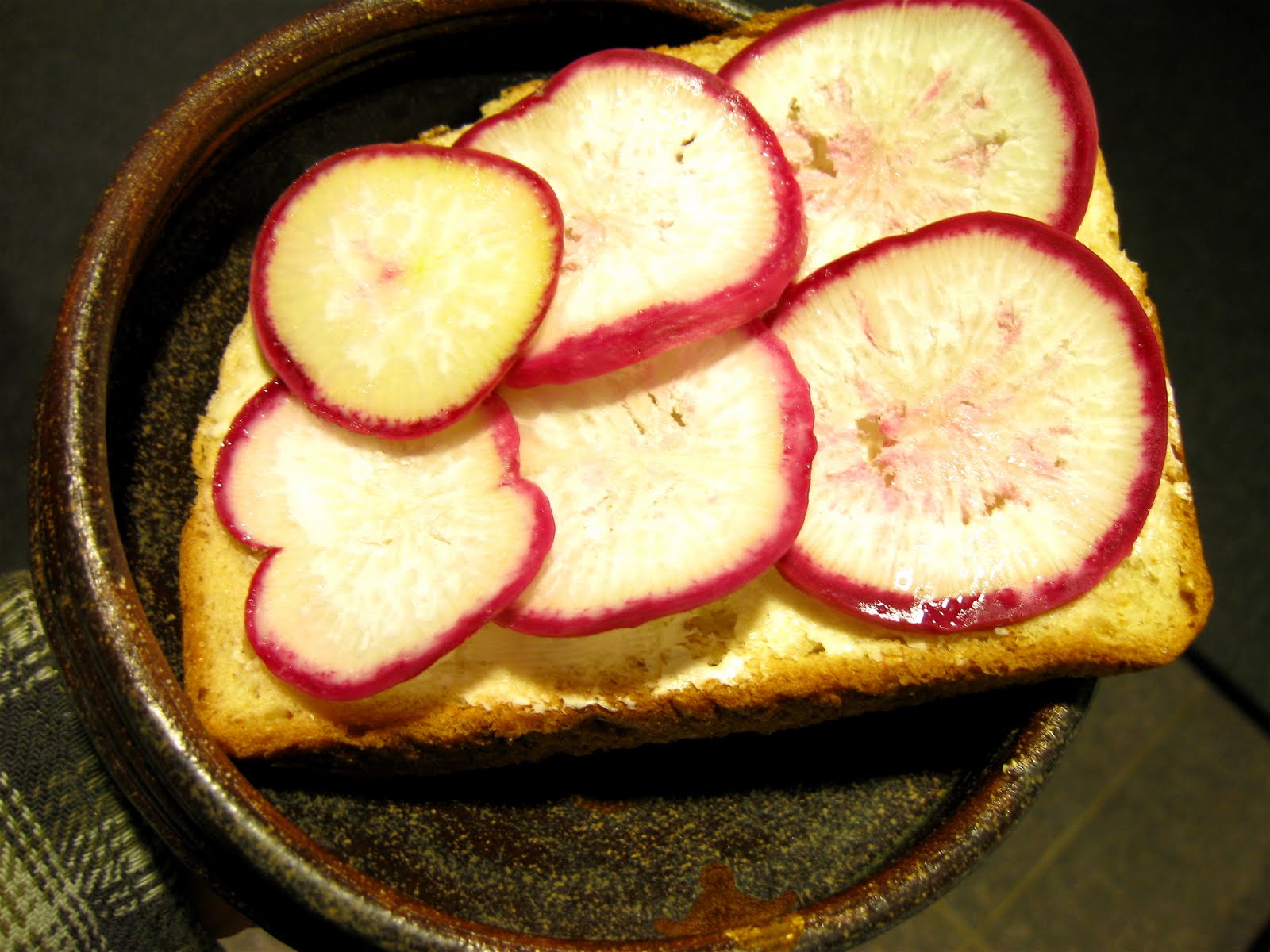
Radish on Buttered Oat Bread

Cherry Belle, French Breakfast, and Icicle radishes.
Cherry Belle radish with a dash of salt on buttered oat bread.
Remember those beautiful giant radishes picked from the garden in early November. Well I've been eating the delectable beasts with the kind of enthusiasm that borders on avarice. Never before had I enjoyed such a radish.

Prior to this I might have glanced at them in the grocer with mild interest those little red balls offered up in the springtime when the weather too quickly turns warm. Perhaps I even purchased a small bunch, quickly regretting the impulse purchase with the first bite from this weird little vegetable whose flavor was an odd mixture of heat and bitterness harking to consuming raw horseradish. Uck, who would eat such a thing. But now. Now. I am a convert, it is as though a moment of clarity has come over me. Grown in the fall with long cool nights and the mildest of days the radish is soft and tender with a crispness reminiscent of the delicate nature of young cucumber which has a drier more fleeting quality then their over-watered and overgrown compatriots. Served on buttered oat bread with the lightest sprinkling of salt, makes this vegetable. A revelation.

I am a bit sad and remorseful that all I have are a few self-sown radishes still in the garden. I will be mourning their absence when they are gone. Wishing I had taken the initiative to plant a giant bed of these lovely plants.

November 5, 2011

Fall Radishes Self-Sowed

White Icicle, French Breakfast, and Cherry Belle radishes in a tender bed of grass.

The garden was tilled in October and in just four weeks the self-sowed radishes have sized up to gargantuan size with the cooling weather. The white radish is of the White Icicle type which has grown amazingly huge to nine inches in just a few weeks, the light green shoulders were growing above soil level. The French Breakfast radish is five inches long and the larger Cherry Belle radish is two inches in diameter. With the colder weather the normally red radishes have turned to a deep rich dark red that is close to the color of a Red Delicious apple. We haven't had a frost yet in western Kentucky, although the killing frost is forecasted for November 20th. Radishes must love the cool 60 degree Fahrenheit temperatures with nightly temps in the upper 30's.