Showing posts with label beets. Show all posts

August 30, 2018

The Late Summer Vegetable Garden

The sweet potatoes are rampaging through the kale bed behind them, but I've managed to keep them out of the other beds. Once the potatoes get lifted in October, this bed will get planted with chicories and spinach to overwinter.

The flowers of the Purple sweet potatoes are quite pretty and they are everywhere. I've never had Beauregard sweet potatoes bloom, so it was a bit of a surprise.
The kale, especially the Portuguese kale with it's large leaves in the back row, have been eaten up by cabbage caterpillars. I've treated the whole bed with Bt, an organic method of control, a couple of times and they're finally coming back from it.
This was the last zucchini plant in the garden. It had managed to hang on through the hot summer. I went ahead and pulled the plant yesterday because it's infected with Powdery Mildew and squash bugs. The Striato d'Italia zucchini pictured was roasted in the oven with an herb blend and a bit of salt, still sweet and flavorful.
The Siam Queen Asian basil is massive. It usually lasts well into the cold days of fall, we don't actually cook with it but add it to hot bowls of soup. To the right is some parsley and leaf celery, the parsley is a little singed from the heat.
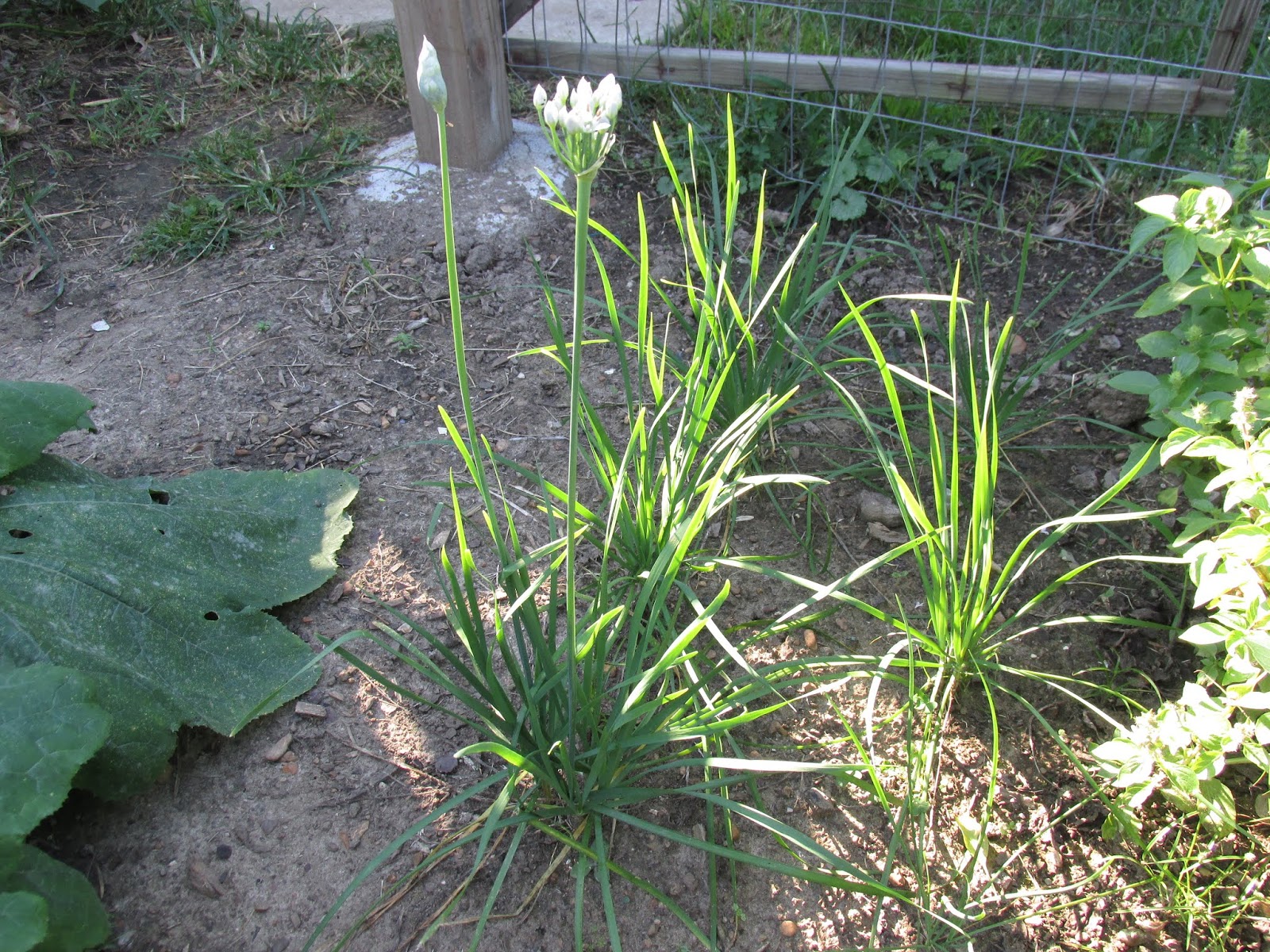
The seven little plants of garlic chives are still alive and the biggest plant is actually blooming. I've seen family friends eat tons of this raw as a garnish to just about every savory dish they consumed. My dad is the same way with hot peppers, he'll alternate bites of hot pepper with normal food during evening meals.
The two pepper beds have merged as one, there's some blooming Italian basil in there as well. We've been getting some heavy rains that keep knocking down a few of the pepper plants, which I'm trying to prop up with bamboo stakes. I've been harvesting enough ripe sweet peppers to have with our lunches, they're prepared by slicing and sautéing with onions and a little salt.
The carrots have come up. Last year they were planted at the end of September which was much too late. Hopefully, this batch was planted early enough to do something. They were planted on the 18th, so it took them awhile to germinate.
The other half of the carrot bed is taken up by radishes. I hope September isn't too hot for them, otherwise they'll end up extra spicy. This bed was seeded on the 18th.
There's 6 different varieties of turnips that were planted in this bed two weeks ago. The two varieties in the front are actually from old seed and took a little longer to germinate.
Half this bed is planted in Gilfeather turnips, which is supposedly a turnip and rutabaga mix. The other half has kohlrabi and fennel.
Newly germinated fennel looks just like carrots, but their cotyledon leaves are a little longer.
I forget how slow growing beets really are, kind of like kohlrabi. The Tall Top Early Wonder beet in the back of the bed was planted June 21st and a few of the roots look ready to pull. Those are leeks in the bed to the right, they'll perk up when it cools down and starts raining regularly.

I've had some trouble with flea beetles this year, which seem to like beets as much as they like eggplants. The garden got treated with beneficial nematodes last week when we had cooler weather, which should help with the flea beetles. I had to wait to the end of summer because nematodes are supposed to be sensitive to heat when they're traveling in the mail system.
This cleared out corn bed will get seeded with all manner of Asian greens and mustards.
I totally cleared out this corn bed yesterday. Our town has a free service where they'll pick up and process non-grassy yard waste into mulch. I just put the corn stalks into the alley for them. The plan is to plant snow peas and snap peas, and then fava beans will go in after them to overwinter.

There's still lots of planting to do for the fall garden. I've got to get greens, peas, and lettuces in soon. Lettuces get pretty dirty from rain splashing soil on them, most people mulch around them or plant them close enough that doesn't happen. My instinct is always to overplant and overcrowd things. When it comes to greens and such, it does seem to help keep them cleaner.

September 20, 2015

An Early Fall Vegetable Garden in September

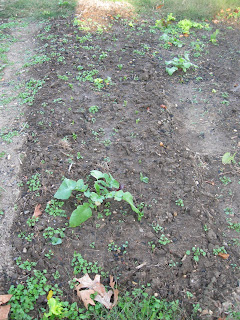
The bed on the left has carrots, radishes, and newly sprouted spinach. On the right is the kohlrabi, turnip and daikon radish bed.
Carrots and radishes intermingling, these were seeded on August 27th.
Where the carrots didn't come up, spinach was seeded amongst the already growing radishes on September 14th.
Kohlrabi planted September 5th are forming their first true leaves.
Shogoin turnips are leafing up well, planted August 27th.
 Ta Mei Hwa daikon radishes growing quickly, seeded September 5th.
This bed was newly seeded September 14th with spinach, chicory, radicchio, sima di rapa, cavolo broccolo, beet, turnip, and carrot.
Beet seedlings with their pretty red stems.
Teton spinach came up great but there is no hide nor hair of Harmony spinach to be seen.

We've been having some beautiful fall weather in western Kentucky. Lots of sunny days in the 70s and 80s (21 to 27 degrees Celsius) and today it rained for the first time in forever, a nice drizzle that went on for a couple hours. Now we are enjoying the humid aftereffects.

The fall garden is doing wonderfully. Although the directly seeded radishes are slow to bulb up, it's probably too warm for them but they'll need to come out in a week or two to make room for the carrots that are sharing the same space. In the beds where the carrots didn't come up due to ancient seeds, I've seeded some spinach which are already starting to emerge. Yay spinach. And yay to no slugs in the new garden.

I still haven't cleared out the tomato and pepper beds. Which will need to happen soon if I want to get some garlic, lettuce, and fava/broad beans planted, and maybe more carrots and turnips. On the Baker Creek seed packet for Kuroda carrots it states they generally plant carrots up to a month before they're first frost date, so I'm going along with that especially since we are close to the same latitude. I have another couple weeks to plant carrots and turnips even if it takes them till December to mature.

I've been purchasing winter hardy varieties of lettuce, spinach, chicory and radicchio. Hopefully I can get these planted in the next couple of weeks giving them about a month to size up before the first frost.

Is it too late to plant beets? Beets seem especially slow to get going compared to turnips, carrots and kohlrabi.

Our first frost is usually the very end of October or first week of November, so I'm wondering when will it be too late to plant beets. Do beets have the same winter hardiness as carrots and don't they take just about as long to mature?

Looking through my blog, in 2011 we didn't have a hard freeze until the week of November 22nd and I was still picking lettuce and radishes at the beginning of December.    

November 6, 2011

Detroit Beets and Swiss Chard

Left: the lovely beets trimmed in crimson. Right: the courageous Swiss Chard.
A carpet of Swiss chard seedlings.
The Detroit beets and Swiss chard were broadcast seeded about four weeks ago and they are just starting to get their true leaves. It seems like it took forever for the seeds to sprout, about 2 weeks for both the beets and the Swiss chard, and it seems to be taking forever for the plants to grow.

Broadcast seeding is an easy way to plant seeds that are small and can taking a little crowding. I just sprinkle the seeds over a patch of loose soil and then rake the soil lightly with the tines going less than an inch deep and making short strokes in a crossing X pattern that goes in opposite directions. Just try to get a somewhat even coverage over the whole bed. This technique seems to work well and usually there's just a few seeds that are left uncovered which I push into the soil.

Beets have a larger seed that is actually made up of a group of 3-5 seeds. I plant the beet seeds further apart then the recommended 2-3 inches by just putting down less seed when broadcasting so I don't have to thin the seedlings. Beets have an earthy warm flavor that is lovely in soups and wonderful as a pickle.

Swiss chard is a leafy green vegetable whose growing pattern is similar to bok choy with thick succulent stems and nice large green leaves, although Swiss chard has thinner stems and can withstand hot weather. Hopefully the plants will over winter without any protection.

October 24, 2011

Broadcast Seeded Beets and Swiss Chard

The gentle Detroit Red beets.
The stout and tender Swiss chard.
Left: Two rows of sugar snap peas. Right: Double row of broad Windsor fava bean bed.
Left: Broadcast seeded Swiss chard and Beets. Right: Volunteer lettuce and radish.
Detroit Red beets and Swiss chard were broadcast seeded and then lightly raked over 2 weeks ago and are now sprouting beautifully. They still have 4 weeks to fill out and become established before the killing frost is forecasted for the end of November. The area the beets have sprouted is a bit thin so I'll probably fill it in with pre-sprouted Bloomsdale spinach seeds.

I'm currently pre-sprouting Bloomsdale spinach and Sugar Snap peas which seem to have problems germinating and breaking through heavy soil, it's a good way to check germination rates since these seeds are from 2009. Pre-sprouting is simple just wrap the seeds in moist papertowels and rinse with fresh water a couple of times a day until little rootlets appear and then gently plant them out singly in little holes. The seeds come up much quicker this way compared to just planting out seeds and watering the soil, germination rates seem to be higher with this method. This works especially well with eggplants and peppers which are notoriously finicky about sprouting at warm temperatures, just put the moist seeds in a warm place like on top of the refrigerator or near a heater.

Before this I have only gardened in the high desert of Idaho. A beautiful and wild landscape of high mountain pines, and desert valleys with sagebrush and dust storms blowing through. Rough country. Stark and uncompromising. Breeding rough private people who want of wide open vistas and to live the independent life. I miss the mountains. I miss the desert. But really, I miss the mountains the most.