Showing posts with label broad windsor fava bean. Show all posts

March 27, 2012

Preparing the Vegetable Garden Soil for Tilling

New garden extension covered during the winter in wood dust and ashes from the woodstove
A nice array of weeds, overwintered lettuces, and fava beans
Tiny little Swiss chard or silverbeet
Tomato, pepper, and eggplant seedlings waiting on the back step
I am a bit embarrassed at all the weeds in the garden, but the only excuse I can offer is a bruised rib and pulled rib muscles. It hurts to breath let alone cough or laugh. So any weeding has only been half hearted at best.

The garden was more than doubled in size in the fall and then the garden extension was allowed to lay fallow covered in wood dust. All winter we have been taking the ashes from the woodstove out into the garden to combine with the wood dust left from having tree stumps ground down. Along with 400 pounds of purchased aged manure and compost all the soil amendments will be tilled under in the next few days. Hopefully the manure will be acidic enough to balance the basic pH of the wood ash.

It is amazing how well the overwintered lettuces and fava broad beans are doing. Even with weedy competition the lettuces seem to be holding their own. And the lettuces are everywhere. There are lettuces in the lettuce bed, the Swiss chard silverbeet bed, and the fava broad bean bed. Too bad the Swiss chard otherwise known as silverbeet are doing so poorly. The chard looks good but they are so little, hardly worth the effort of overwintering but that may be due to not getting them big and established enough before the cold weather set in.

March 22, 2012

To Till or Not To Till the Garden and Mow Down the Fava Beans

Silver green colors of Windsor fava broad bean.

Overwintered self sowed free range lettuces
The overwintered free range or self seeded lettuces were mowed down by my husband as their bed was covered in weeds preparing to flower so he wanted to catch them before they spread. The lettuces are coming back quickly with the warm weather. The overwintered fava beans have been enjoying the heat as well and are laden with blossoms but not a single bean has yet to form, admittedly there are very few pollinators about especially since the weeds were mowed down. But still the fava beans are over knee high and not a single pod has been born.

I am still debating whether or not to till the whole garden. Starting over is alluring and oddly seductive. There is the whole clean slate put your plants where you want them thing, but the fava beans are growing so well and it would be lovely to taste some for the first time. My husband says they are utterly delicious.

It has been very warm for such an early spring with temperatures around 86 degrees Fahrenheit (30 Celsius). I have been seduced by warm temperatures before and made the mistake of planting tender tomato, eggplant and peppers out early only to lose dozens of home raised seedlings. This was in an early April in the high mountain desert rather than the river country where I live now. Those lost seedlings were very large and well hardened off, it was a mistake I have learned from.

Big beautiful worms are living in the fava bean bed, I was pulling some weeds and managed to pull up a few lovely worms. Here's to a gigantic harvests of gorgeous vegetables.

March 10, 2012

Surviving the Winter Blooming Windsor Broad Fava Bean, Lettuce, and Swiss Chard

Some of the pictures are clickable if you want to get a closer look at the plants that have survived the dark cold winter after sprouting in October.

Lettuce of the Self Sowed Variety and Swiss Chard and Wild Onions
Flowering Windsor Broad Fava Bean
The Windsor fava broad beans are full of blossoms even though nary a bean has yet to form. The plants are not very tall yet maybe ten inches (25.4 cm) but they should grow up to three to four feet tall (0.9 - 1.2 meters). Just a few had blackened tips from the winter frosts and some of the plants had stems that had bent and died in the wind storms but every single plant has lived through the long dark winter days, after being directly seeded into the garden mid-October.

The lettuces have formed beautiful rosettes, although the weeds are also huge and definitely competing with the lettuces. But the Swiss chard are tiny tiny tiny and the wild onions don't look as if they'll be getting very big this year. All the large lettuces were harvested December 2nd before the first hard frost, and the lettuce that are now in the garden were tiny self-sowed starts at the beginning of winter.

November 22, 2011

Hard Freezes and Over Wintering Lettuce and Fava Broad Beans

Grand Rapids and Cimmaron volunteer lettuces.
We have had two hard freezes in our area last week with the temperature getting down to the low 20's Fahrenheit. The volunteer melons, beans, and tomatoes have bit the dust but the volunteer lettuces of the Grand Rapids and Cimmaron varieties are still going strong and are filling their bed out nicely. It has been raining a lot lately and the weather has warmed to the 50's and 60's during the day. Which means the plants that love the cool weather are growing quickly in the grey wet wintry days.

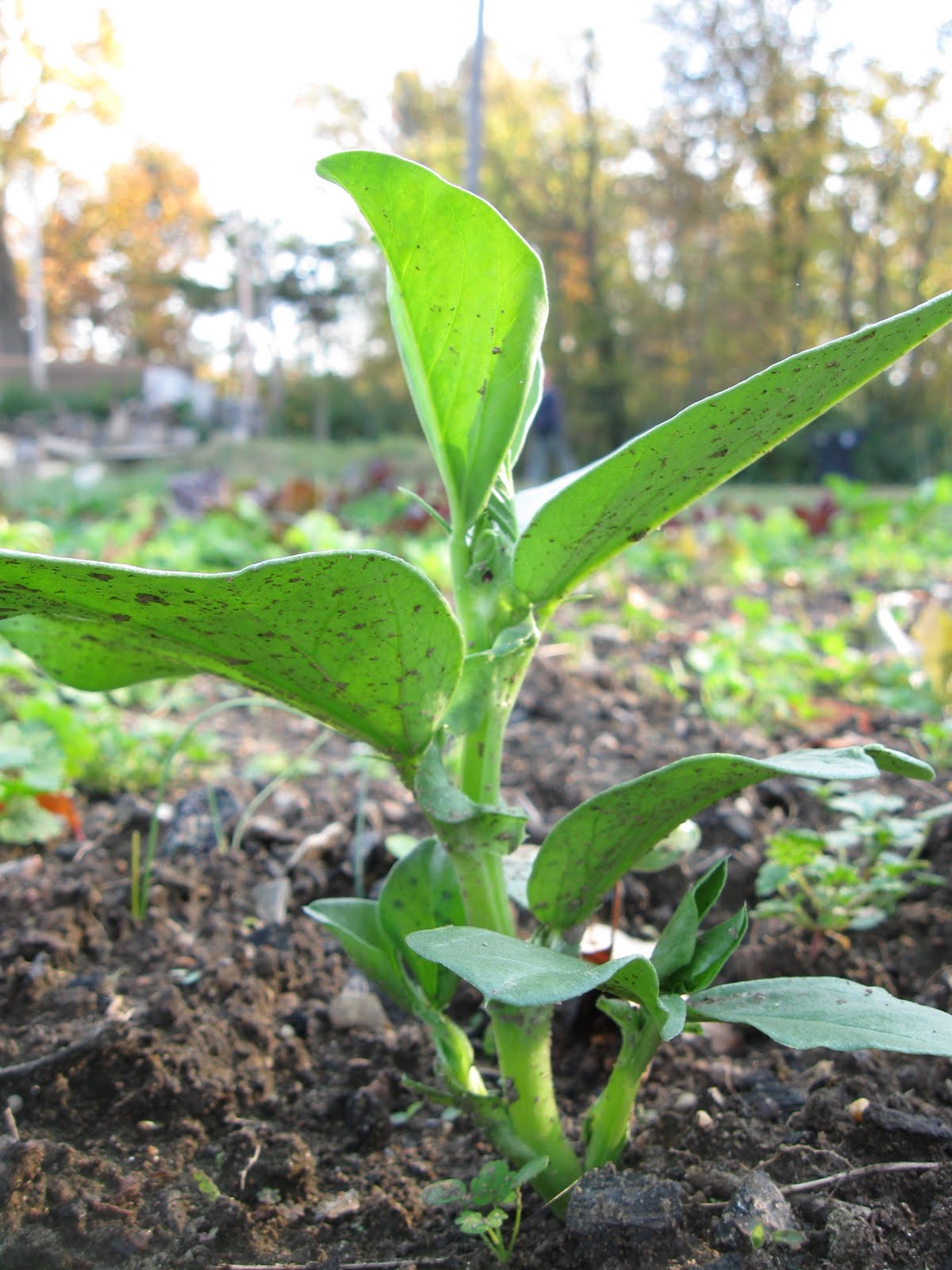
Broad Windsor fava bean plant.
The Broad Windsor fava beans are growing beautifully. They are already 6-8 inches tall with most of them branching out and forming multiple stems. The fava bean plants should end up 3 feet tall at their tallest. I enjoy seeing the garden covered in fall leaves. It reminds me that despite the cold dreariness of winter that things can still grow and flourish in the cold earth.

Freshly tilled ground with mulch spread over top.
New ground has been tilled. We have extended the garden by more than twice its length and spread mulch over the surface which should break down over the winter months and then will be rototilled in for spring planting. I plan on storing and saving a lot more food by either canning or freezing the surplus. Most of my neighbors in Idaho tried to preserve at least 4 years worth of food by canning, freezing, and drying. My main food crops will be tomatoes for sauce and salsa, green beans, corn, dried beans, summer and winter squash, and peppers.

I have not been able to grow large amounts of cucumbers, eggplants, zucchini, or summer squash in western Kentucky. The heat and humid may play a part, but truth be told I have never seen so many insects in my life as they have in this area. The stem borers, Japanese beetles, and squash bugs can be just awful. This year I am going to try interplanting marigold flowers, nasturtium, dill, basil, and cilantro in hopes of deterring the insect pests from the vegetables.

Tomatoes, okra, peppers, green beans, and sweet potatoes do simply wonderfully in this climate. Japanese beetles do seem to love the okra and green beans and end up consuming a great deal of the plants foliage, but the plants always seem to pull through and produce in large quantities. I have heard of people pickling, canning and drying okra. Now, the idea of drying okra is somewhat alluring but the high humidity in this area curtails some of my enthusiasm. Hmmm.

November 8, 2011

Over Wintering Broad Windsor Fava Beans

Something is amiss. Some creature is nibbling on the fava bean plants.
More Broad Windsor fava bean damage by an unknown assailant.
Oh how lovely. The delicately veined thick succulent leaves.
Already branching out reaching for the sun.
The Broad Windsor fava beans are growing fairly quickly in the cool mild weather. In just two and a half weeks the plants are already branching out and forming multiple stems. They are such pretty plants with their thick leaves and delicate colors. Fava beans are supposed to get four to five feet tall and they say 10-20 plants per person should be enough to supply you with tender tips that can be eaten like spinach, young pods eaten like green beans, young beans can be quickly boiled for 3-5 minutes and eaten like spring peas, and the old beans can be dried and saved for winter soups and stews.

I'm hoping the broad beans were planted late enough to ensure flowering in early spring when insect pollinators are around. Otherwise I might have to resort to hand pollinating with a q-tip.