Showing posts with label broad bean. Show all posts

March 26, 2012

Fava Broad Beans are Starting to Grow and Form Little Beans


After all the blossom drop without a bean ever forming, we have our first Windsor Fava broad beans. It just took a few warm days and the pollinators finally made it out to the plants. At first the bees seemed more drawn to the weeds but my husband took care of that with the lawnmower. The flowers are lovely with white petals and black markings, strangely enough when the flowers are pollinated the stem on the flower thickens and straighten up so the beans actually point to the sky. The ants seem really drawn to the plants and flowers so they may be doing the actual pollinating, and it is a sparse pollination the plants are getting for every cluster of five flowers perhaps one is being pollinated.

I have seen one aphid on the fava broad bean plants and am keeping a close watch because aphids are supposed to be such a menace for the plants. Aphids suck on the tender parts of plants distorting the growth. The intermittent heavy rain every few days may be helping on the aphid front.

To make growing fava beans worthwhile half of the garden would probably have to be planted and overwintered with just broad beans.

November 22, 2011

Hard Freezes and Over Wintering Lettuce and Fava Broad Beans

Grand Rapids and Cimmaron volunteer lettuces.
We have had two hard freezes in our area last week with the temperature getting down to the low 20's Fahrenheit. The volunteer melons, beans, and tomatoes have bit the dust but the volunteer lettuces of the Grand Rapids and Cimmaron varieties are still going strong and are filling their bed out nicely. It has been raining a lot lately and the weather has warmed to the 50's and 60's during the day. Which means the plants that love the cool weather are growing quickly in the grey wet wintry days.

Broad Windsor fava bean plant.
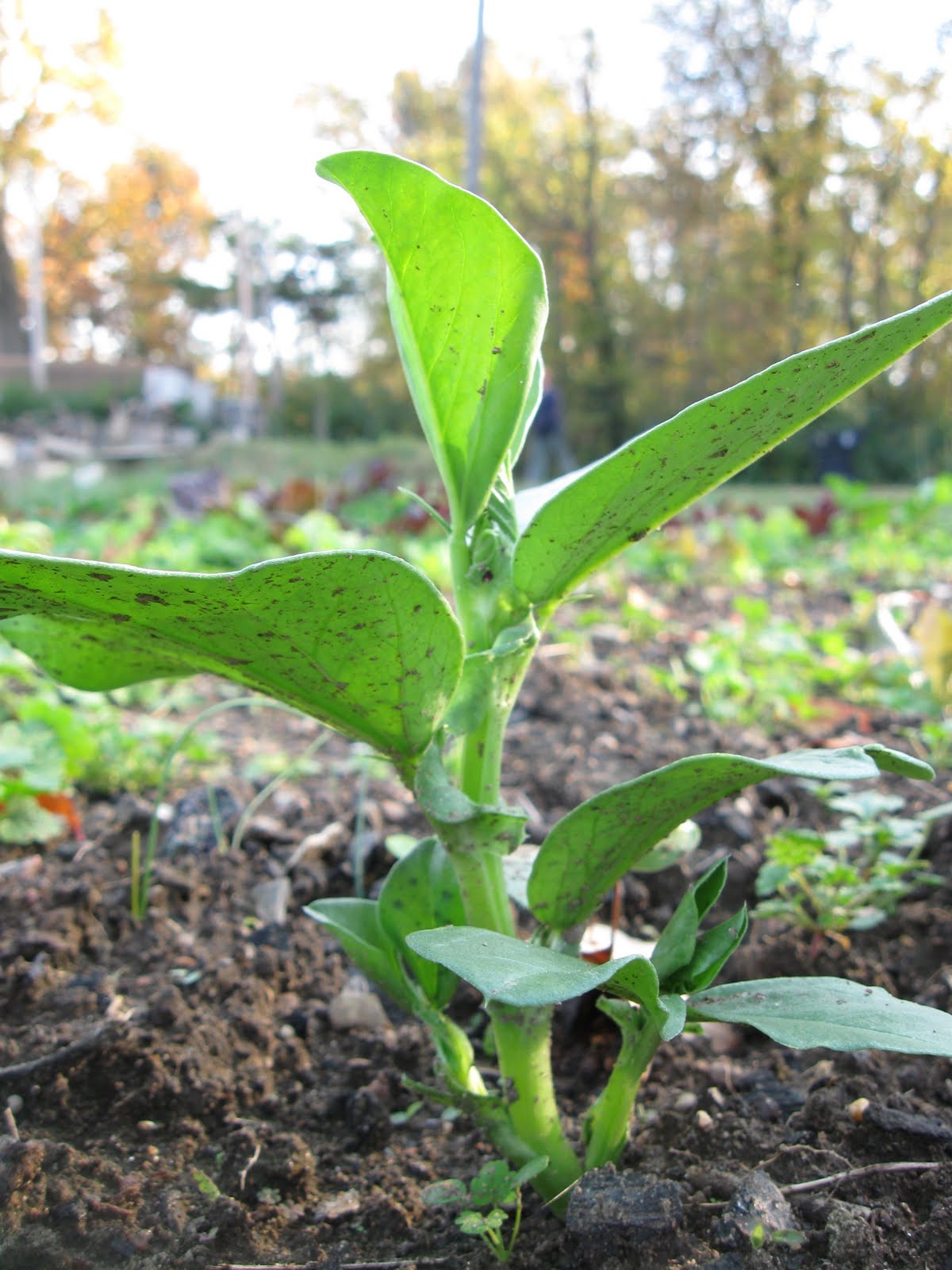
The Broad Windsor fava beans are growing beautifully. They are already 6-8 inches tall with most of them branching out and forming multiple stems. The fava bean plants should end up 3 feet tall at their tallest. I enjoy seeing the garden covered in fall leaves. It reminds me that despite the cold dreariness of winter that things can still grow and flourish in the cold earth.

Freshly tilled ground with mulch spread over top.
New ground has been tilled. We have extended the garden by more than twice its length and spread mulch over the surface which should break down over the winter months and then will be rototilled in for spring planting. I plan on storing and saving a lot more food by either canning or freezing the surplus. Most of my neighbors in Idaho tried to preserve at least 4 years worth of food by canning, freezing, and drying. My main food crops will be tomatoes for sauce and salsa, green beans, corn, dried beans, summer and winter squash, and peppers.

I have not been able to grow large amounts of cucumbers, eggplants, zucchini, or summer squash in western Kentucky. The heat and humid may play a part, but truth be told I have never seen so many insects in my life as they have in this area. The stem borers, Japanese beetles, and squash bugs can be just awful. This year I am going to try interplanting marigold flowers, nasturtium, dill, basil, and cilantro in hopes of deterring the insect pests from the vegetables.

Tomatoes, okra, peppers, green beans, and sweet potatoes do simply wonderfully in this climate. Japanese beetles do seem to love the okra and green beans and end up consuming a great deal of the plants foliage, but the plants always seem to pull through and produce in large quantities. I have heard of people pickling, canning and drying okra. Now, the idea of drying okra is somewhat alluring but the high humidity in this area curtails some of my enthusiasm. Hmmm.

November 8, 2011

Over Wintering Broad Windsor Fava Beans

Something is amiss. Some creature is nibbling on the fava bean plants.
More Broad Windsor fava bean damage by an unknown assailant.
Oh how lovely. The delicately veined thick succulent leaves.
Already branching out reaching for the sun.
The Broad Windsor fava beans are growing fairly quickly in the cool mild weather. In just two and a half weeks the plants are already branching out and forming multiple stems. They are such pretty plants with their thick leaves and delicate colors. Fava beans are supposed to get four to five feet tall and they say 10-20 plants per person should be enough to supply you with tender tips that can be eaten like spinach, young pods eaten like green beans, young beans can be quickly boiled for 3-5 minutes and eaten like spring peas, and the old beans can be dried and saved for winter soups and stews.

I'm hoping the broad beans were planted late enough to ensure flowering in early spring when insect pollinators are around. Otherwise I might have to resort to hand pollinating with a q-tip.

October 23, 2011

Broad Windsor Fava beans and Free Range Radishes

Broad Windsor fava bean sprout.
Two rows of fava beans.
Free range radishes of the Icicle and maybe Cherry Belle types.
Sprouting Sugar Snap peas.
The Windsor fava beans were planted out just a week ago and it looks like we had 100% germination of the two rows. Hopefully the 30 plants will over winter well and produce enough beans for two people in early spring. The leaves and tips of the plants are edible and are said to a spinach slight peppery flavor. The fava bean bed has free range radishes and lettuces that have reseeded themselves and are quickly sizing up in the cool weather of fall.

I am excited since this will be my first time growing fava beans and planting out crops for the fall.

The peas that were planted out 2 weeks ago have sparsely sprouted so I'm pre-sprouting the next batch of Sugar Snap peas before planting them.