The sweet potatoes are rampaging through the kale bed behind them, but I've managed to keep them out of the other beds. Once the potatoes get lifted in October, this bed will get planted with chicories and spinach to overwinter.
The flowers of the Purple sweet potatoes are quite pretty and they are everywhere. I've never had Beauregard sweet potatoes bloom, so it was a bit of a surprise.
The kale, especially the Portuguese kale with it's large leaves in the back row, have been eaten up by cabbage caterpillars. I've treated the whole bed with Bt, an organic method of control, a couple of times and they're finally coming back from it.
This was the last zucchini plant in the garden. It had managed to hang on through the hot summer. I went ahead and pulled the plant yesterday because it's infected with Powdery Mildew and squash bugs. The Striato d'Italia zucchini pictured was roasted in the oven with an herb blend and a bit of salt, still sweet and flavorful.
The Siam Queen Asian basil is massive. It usually lasts well into the cold days of fall, we don't actually cook with it but add it to hot bowls of soup. To the right is some parsley and leaf celery, the parsley is a little singed from the heat.
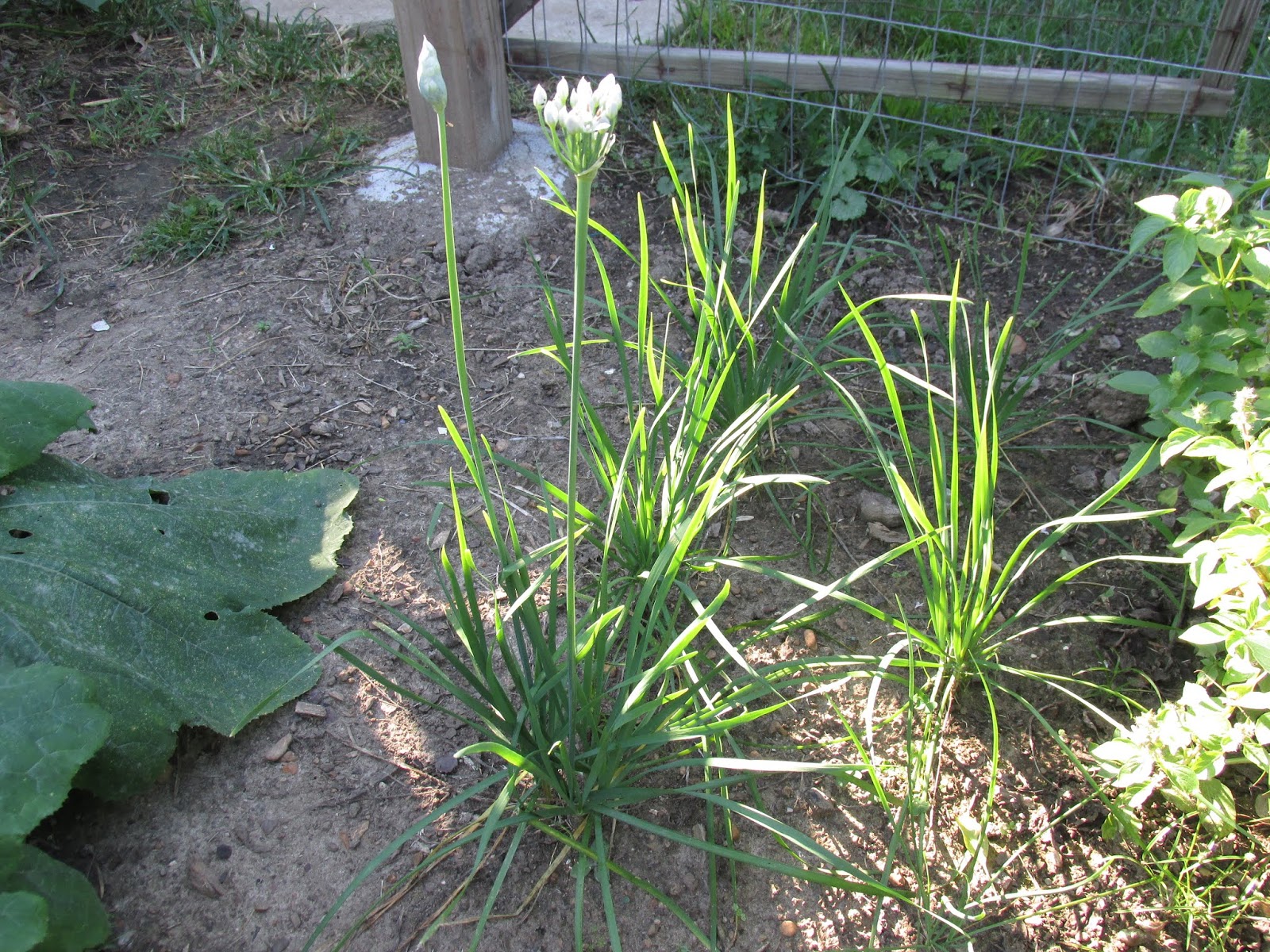
The seven little plants of garlic chives are still alive and the biggest plant is actually blooming. I've seen family friends eat tons of this raw as a garnish to just about every savory dish they consumed. My dad is the same way with hot peppers, he'll alternate bites of hot pepper with normal food during evening meals.
The two pepper beds have merged as one, there's some blooming Italian basil in there as well. We've been getting some heavy rains that keep knocking down a few of the pepper plants, which I'm trying to prop up with bamboo stakes. I've been harvesting enough ripe sweet peppers to have with our lunches, they're prepared by slicing and sautéing with onions and a little salt.
The carrots have come up. Last year they were planted at the end of September which was much too late. Hopefully, this batch was planted early enough to do something. They were planted on the 18th, so it took them awhile to germinate.
The other half of the carrot bed is taken up by radishes. I hope September isn't too hot for them, otherwise they'll end up extra spicy. This bed was seeded on the 18th.
There's 6 different varieties of turnips that were planted in this bed two weeks ago. The two varieties in the front are actually from old seed and took a little longer to germinate.
Half this bed is planted in Gilfeather turnips, which is supposedly a turnip and rutabaga mix. The other half has kohlrabi and fennel.
Newly germinated fennel looks just like carrots, but their cotyledon leaves are a little longer.
I forget how slow growing beets really are, kind of like kohlrabi. The Tall Top Early Wonder beet in the back of the bed was planted June 21st and a few of the roots look ready to pull. Those are leeks in the bed to the right, they'll perk up when it cools down and starts raining regularly.
I've had some trouble with flea beetles this year, which seem to like beets as much as they like eggplants. The garden got treated with beneficial nematodes last week when we had cooler weather, which should help with the flea beetles. I had to wait to the end of summer because nematodes are supposed to be sensitive to heat when they're traveling in the mail system.
This cleared out corn bed will get seeded with all manner of Asian greens and mustards.
I totally cleared out this corn bed yesterday. Our town has a free service where they'll pick up and process non-grassy yard waste into mulch. I just put the corn stalks into the alley for them. The plan is to plant snow peas and snap peas, and then fava beans will go in after them to overwinter.
There's still lots of planting to do for the fall garden. I've got to get greens, peas, and lettuces in soon. Lettuces get pretty dirty from rain splashing soil on them, most people mulch around them or plant them close enough that doesn't happen. My instinct is always to overplant and overcrowd things. When it comes to greens and such, it does seem to help keep them cleaner.