 |
| Self-sown beans |
In the United States most of us are well into fall/autumn and I wanted to do a big fall garden this year which means lots of direct seeding. It's been in the 90's (32 degrees Celsius) for most of September. But cooler weather is predicted for this weekend, so I've been running around like a crazy person this week preparing the rest of the garden beds.
A few things did get started in containers, but they were visited by one disaster after another. If it wasn't squirrels digging and mangling seedlings, than it was birds pecking off every single spinach seedling in 3 containers. Then there was the torrential rain.
For the month of September I have been direct seeding in the garden:
- peas
- radish
- turnip
- carrot
- beet
- sprouting broccoli
- sprouting turnip
- spinach
- lettuce
- chicory
- endive
- mizuna
- tatsoi
- mibuna
- choy sum
- pak choy
- gailan
- komatsuna
- corn salad
- mustard
Direct seeding is definitely where it's at. Sprinkle a few seeds on the ground and water everyday till they germinate, then watch them grow. I just love watching plants go through their whole lifecycle. So fun.
When the seedlings are little and just starting to germinate, I water by hand everyday with a watering can that has a fine stream. Once the plants get a bit bigger, I'll start thinning/harvesting.
With it being so hot most everything is germinating in 3-4 days. Although, I had to replant one of the pea beds a couple times, either due to old seed or planting them too early in the day and they ended up cooking in the ground.
When the seedlings are little and just starting to germinate, I water by hand everyday with a watering can that has a fine stream. Once the plants get a bit bigger, I'll start thinning/harvesting.
With it being so hot most everything is germinating in 3-4 days. Although, I had to replant one of the pea beds a couple times, either due to old seed or planting them too early in the day and they ended up cooking in the ground.
Plans for October:
- Dig and plant the bed for fava beans or broad beans.
- Dig and plant the greenhouse with spinach, lettuce, and peas.
- Direct seed even more turnips and radishes
 |
I hand dug the beds, broke up the top crust with a rake, broadcast sowed the tiny seeds, and then tamped down the soil with the top of a rake. For beets, carrots, turnips, and radishes I pulled back the soil, broadcast the seeds, and then covered with soil.
It's definitely a little late for planting carrots and beets but we should have two more months of frost free weather, and there's always a chance for a mild winter.
|
 |
| Mingling with self-sown bush beans are rapini/sprouting broccoli, sprouting turnips, and kohlrabi. |
 |
| Sprouting broccoli or broccoli raab. |
 |
Choy sum is a green that is usually allowed to bolt, the flowering stems are supposed to be deliciously sweet and crunchy. I've had them prepared by quick parboiling and then quickly stir-fried with garlic and salt in a very hot pan. So good.
|
 |
| The pea beds are interplanted with turnips and Giant Luo Buo radishes. |
 |
Little snap pea seedlings. This bed came up fine, but the peas in the other bed had to be replanted 3 times.
|
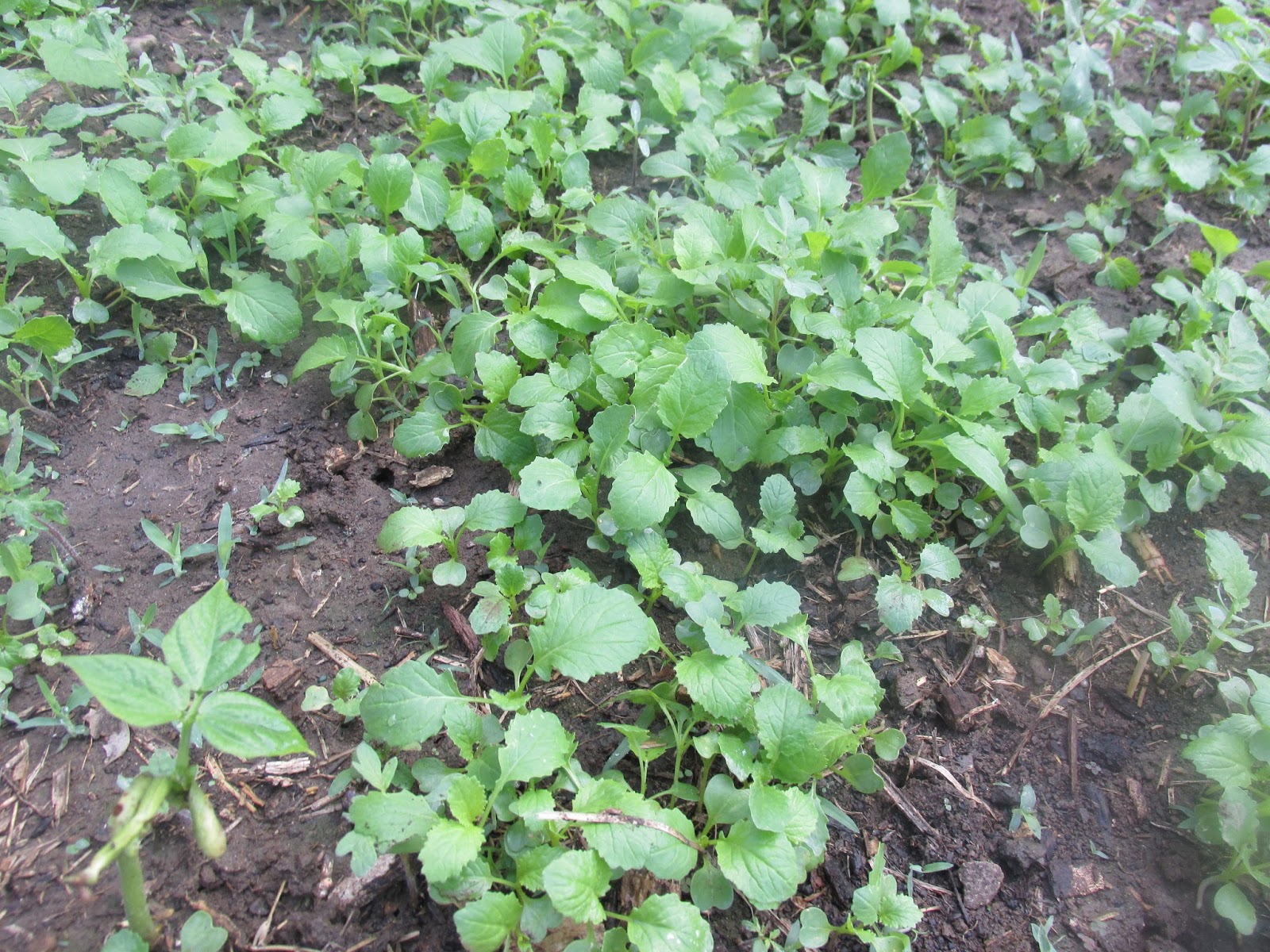 |
| Sprouting turnips or Sessantina cima di rapa |
 |
| The pretty serrated leaves of Early mizuna. |
 |
| Mibuna is such a stately leafy green. |
 |
| The every pleasant tatsoi. |
 |
Tomato cages are being used as supports for the peas, and then turnips and radishes are planted in-between. You can also see the self-sown squash and okra in these beds.
|


